How to Get Event Sponsors in the UK: A Practical Guide for Fairs, Festivals and Local Events
Event sponsors are not looking for a logo on a banner. They are looking for a defined audience, a reason to be in the room and proof afterwards that it was worth it. Organisers who understand that sell out their sponsorship packages months ahead; organisers who send a price list of logo sizes do not. This guide explains what event sponsors want in 2026, how to build and price packages for a fair, festival, market, conference or community event in the UK, where to find sponsors, how to write the one-page proposal, which rules apply and how to turn a first sponsor into a returning one.
Brands, authors and local businesses post paid opportunities on ZOMZEY and event organisers pitch for them, with every deal funded before the doors open.
What event sponsors actually want
Event sponsors want three things, in this order. First, the right people: a sponsor of a children’s book festival wants parents of young readers in one place, and will pay for that more readily than for a larger crowd of mixed strangers. Second, a role rather than a placement: naming the stage, hosting the workshop, supplying the goody bag or running the tasting gives the sponsor something to do and something to talk about. Third, evidence: attendance, photographs, reach of the promotion before and after, and anything that shows their involvement was noticed. Build every package around those three and the price follows.
Build packages, not a logo menu
Start with the assets you control and turn each into a product that event sponsors can buy. The headline or title sponsorship names the whole event. Zone or stage sponsorship names an area. Activity sponsorship covers a workshop, a competition, a children’s area or a bar. Material sponsorship covers lanyards, programmes, signage, wristbands and bags. Hospitality covers a VIP hour, a speakers’ room or a sponsor’s reception. Digital covers the website, the ticketing emails, the social countdown and the recap. Trade stands and exhibitor pitches are a separate product with their own price.
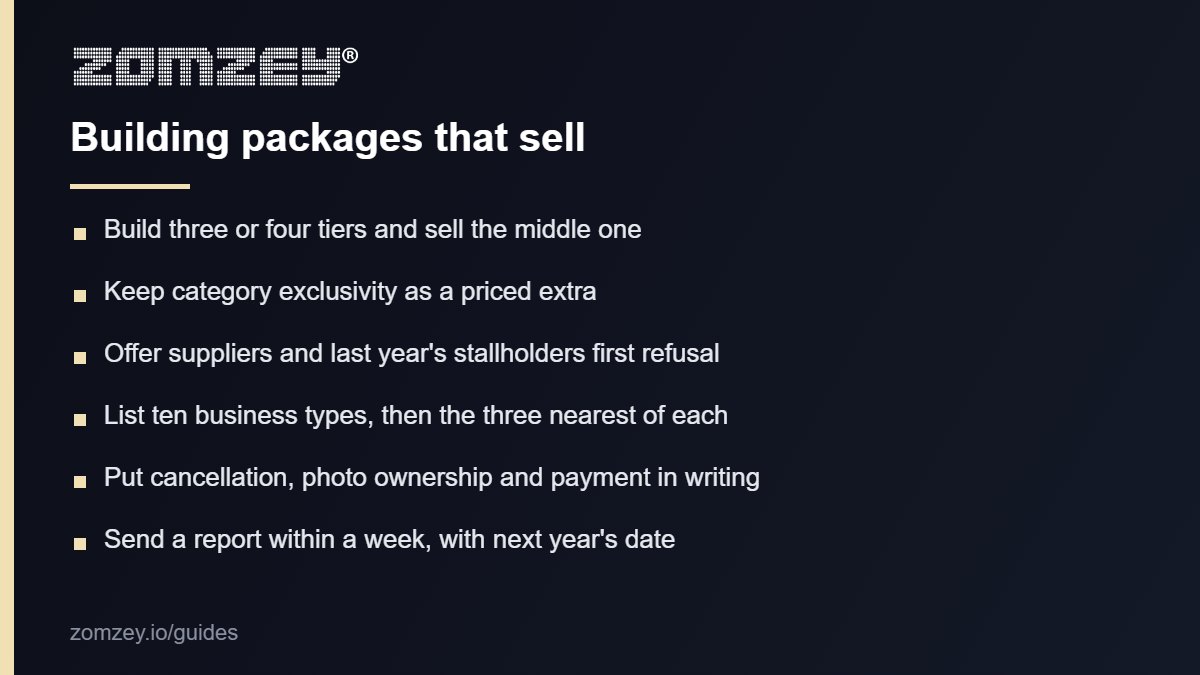
Group these into three or four tiers with clear names, a fixed price and a short list of what is included, and make the middle tier the one you most want to sell. Keep exclusivity as a priced extra: a category exclusive (the only coffee brand, the only estate agent) is worth a great deal to the sponsor and should never be included by accident.
How to price event sponsors
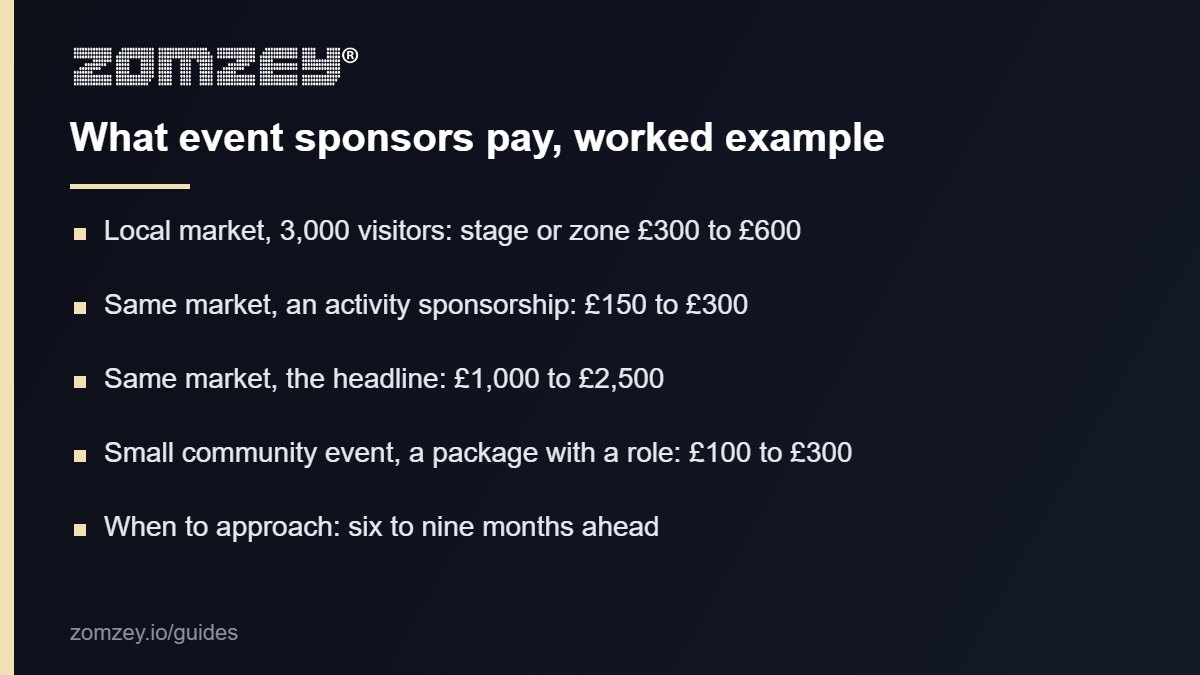
Price from the audience and the cost of the alternative, not from what you need to raise. Work out your expected attendance, your promotional reach (email list, social following, local press, partners), and the value of the role you are offering. A local food market with 3,000 visitors and a 2,500-person email list can reasonably ask £300 to £600 for a stage or zone sponsorship, £150 to £300 for an activity, and £1,000 to £2,500 for the headline. A regional festival with 15,000 visitors multiplies those figures several times.
Compare the package with what the sponsor would pay to reach the same people through local advertising, and price a little below it, with the role and the evidence as the reason to choose you.
Small events should not undersell. A £150 package that includes a named workshop, a mention in every email and a photo recap is worth more to a local business than a £40 logo nobody sees, and it is easier to renew. The free Hub Earnings Estimator gives a starting range for an event of your size and reach.
Where to find event sponsors
Your suppliers and exhibitors
The businesses already involved, from the caterer and the printer to last year’s stallholders, know the event works. Offer them first refusal on packages before you approach anyone cold.
Businesses that want your audience
List the ten types of business that sell to the people attending, then the three nearest of each. A dog show has pet shops, vets, groomers and insurers within five miles; a craft fair has haberdasheries, framers and art schools. Local managers can say yes without a head office.
Brands sponsoring similar events
Look at the sponsors of the five events most like yours. They have already decided that event sponsorship reaches your kind of audience, so your proposal is about fit and price rather than about whether to sponsor events at all.
A marketplace where sponsors post the budget
On ZOMZEY, Pioneers with something to promote, such as brands, authors and makers, post paid opportunities and event organisers pitch for them, or you list the event and its sponsorship packages and let the right sponsor find you. Each deal is agreed in writing, funded under Protected Payments before the event, and released when the sponsor approves the evidence afterwards. For an organiser, it removes the two things that make event sponsors hard work: finding them and getting paid by them.
The one-page proposal
Event sponsors read one page and skim the rest. The page carries the event name, date and place; who attends and how many; your promotional reach with numbers; the packages and prices; what the sponsor gets at each tier; past sponsors and a quote from one; and a deadline for artwork. The email that carries it names why this business fits this audience, suggests one package, and asks a question that is easy to answer. Follow up after a week, then once more. Most sponsorships are agreed on the second or third contact, and the ones agreed early are the ones that get the best positions.
The rules in the UK
Sponsorship is a commercial relationship and should look like one. Describe sponsors as sponsors in your programme, website and social posts, and if a creator is paid to promote the event, their posts must carry an ad label, as the ASA and CMA Influencers’ Guide explains. Competitions and giveaways run with a sponsor are prize promotions with their own rules, so state the closing date, the prize and the terms. Alcohol, gambling and age-restricted sponsors carry extra restrictions, particularly at events with children present, and the event licence or venue agreement may limit what a sponsor can do on site.
Put the agreement in writing: what the sponsor gets, by when, what happens if the event is cancelled or postponed, who owns the photographs, and when the money is paid. Sponsorship income is taxable for a business and usually for an individual organiser; GOV.UK explains when to register as self-employed. A deal run through ZOMZEY keeps the agreement, the evidence and the payment record on one page.
Delivering and proving it
Deliver every item in the package and keep a record as you go: photographs of the signage, the stage and the sponsor’s activity in use; the attendance figure; screenshots of the emails and posts that named them with their reach; press coverage; and any leads or sales the sponsor can see from their stand.
Send a short report within a week of the event, with thanks and the date of next year’s event. Event sponsors who receive a report renew at a rate organisers without one never see, and a renewal conversation held while the photographs are fresh is the easiest sale of the year. On ZOMZEY the evidence is uploaded to the deal page, the sponsor approves it and the payment is released.
Staffing or promoting an event? Post a job free on ZOMZEY to reach promoters, photographers, videographers, musicians and venues.
Venues and acts by city
ZOMZEY lists venues and performers by location, which makes it easier to put a local sponsor, a venue and an act together for the same event.
- Hubs by city, the venues, shops and communities that host events, including Greater London, Glasgow, Belfast and Paignton.
- Bands by city and musicians by city, for live acts available to book.
- Influencers by city, to promote the event before and after the day.
Common questions about event sponsors
How far ahead should I approach event sponsors?
Six to nine months for annual budgets, three months at the latest for local businesses. Headline packages go first, so sell those before the smaller ones.
Can a small community event get event sponsors?
Yes. A village fete, a school fair or a club open day has exactly the local, defined audience that nearby businesses want, and a £100 to £300 package with a role at the event is an easy decision for them.
Should I offer stands instead of sponsorship?
Offer both. A stand sells event sponsors a place to trade; sponsorship sells them a role and visibility. Many businesses take a stand first and sponsor the following year once they have seen the crowd.
What if an event sponsor pulls out or does not pay?
A written agreement with a payment date, a cancellation clause and a deposit protects you with direct deals. With a deal funded under Protected Payments, the money is held before the event and released on approval, and a dispute is reviewed against the agreement if the sponsor goes quiet.
Do event sponsors expect exclusivity?
Headline sponsors often do, within their category. Offer it as a priced extra with a defined scope, and never promise exclusivity you cannot police among the stallholders.
In short, event sponsors pay for the right audience, a role at the event and proof afterwards. Build tiered packages from the assets you control, price them from attendance and reach, find sponsors among the businesses that already want your audience, keep the agreement in writing and report back within a week. Run the deal through ZOMZEY and the sponsorship is funded before the doors open.