How to Promote a Self-Published Book in the UK
Publishing the book is the start, not the finish. Self published authors who sell well treat promotion as a steady, planned part of the work, mixing things readers can see in person, such as bookshops and events, with the places they discover books online. This guide sets out a practical plan for UK authors, from getting the foundations right to working with bookshops, creators and reviewers.
Post what you need, from a bookshop window to a BookTok video, and receive offers from shops and creators.
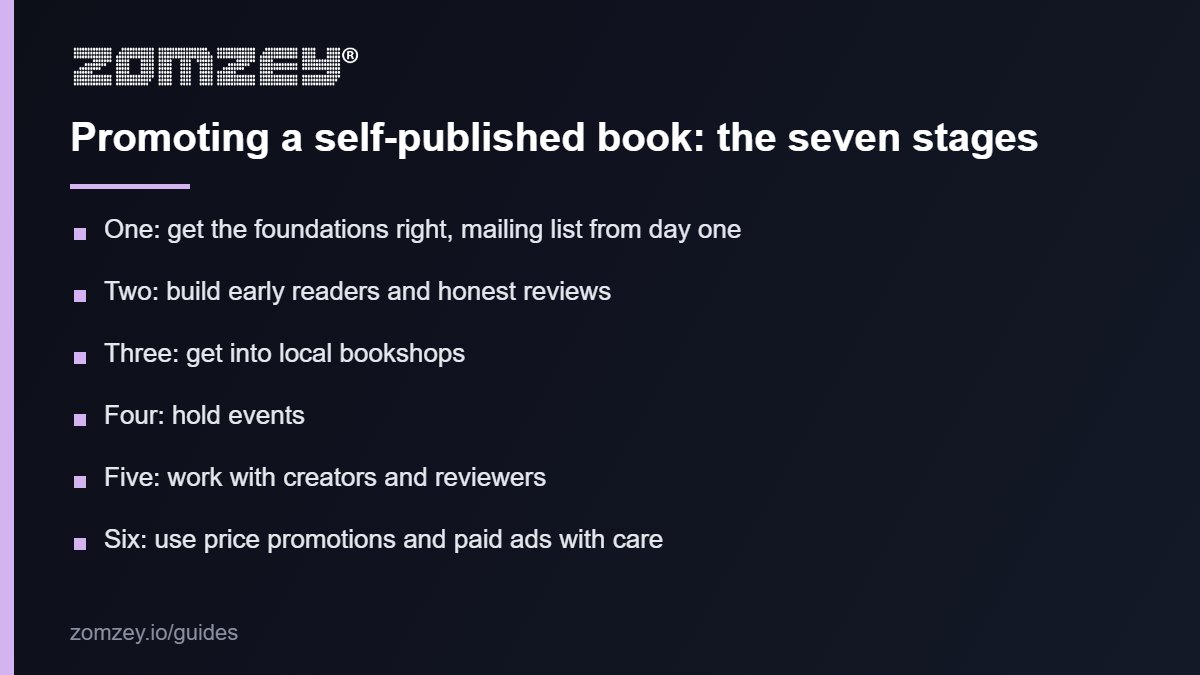
1. Get the foundations right
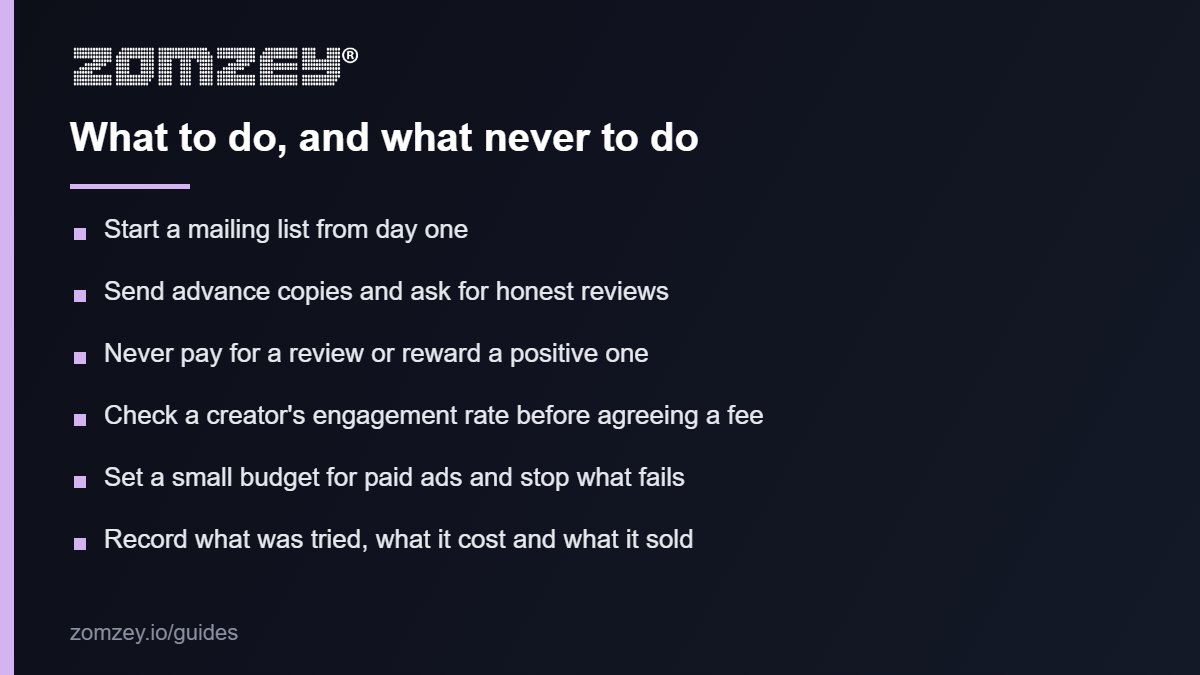
Every other step works better when the book itself is ready: a professional cover that fits its genre, a blurb that hooks the reader in the first line, and careful choice of categories and keywords wherever the book is listed. Give readers somewhere to find you, such as a simple author website, and start a mailing list from day one, so the readers you win can hear about your next book.
2. Build early readers and honest reviews
Send advance copies to readers in your genre and ask for honest reviews once the book is out. Reviews build trust with new readers, but they must stay genuine: never pay for a review or offer anything in return for a positive one.
3. Get into local bookshops
Your local independent bookshop is often your best first stockist, especially as a local author. Our guide to getting your book into bookshops in the UK covers making the book ready for the trade, the terms shops expect, and how to approach them.
4. Hold events
Signings, readings, library talks and book club visits put you in front of readers who are ready to buy. Many independent bookshops host author events, and some offer event packages that include promotion in the shop and in their newsletter.
For event ideas, see our list of 30 book launch ideas for UK authors.
5. Work with Influencers, creators and reviewers
BookTok and Bookstagram creators, book bloggers and newsletter writers can introduce your book to readers who trust their taste. Agree the deliverables and the fee up front, check a creator’s engagement with the free engagement rate calculator, and make sure paid posts are clearly labelled as advertising, as the Advertising Standards Authority explains in its guide for influencers. Payment buys a creator’s time and honest opinion, never a guaranteed rave.
6. Use price promotions and paid advertising with care
Limited time discounts, promoted through reader deal newsletters and your own mailing list, can bring a burst of new readers. Paid adverts on bookshops’ websites and social media can help too, but set a small budget, measure what each one returns, and stop what does not work.
7. Keep going, and measure
Keep a simple record of what you tried, what it cost and what it sold. Repeat what works, especially the things that build lasting readers, such as events, bookshop relationships and your mailing list.
How ZOMZEY helps authors
On ZOMZEY, you post the promotion you want, for example a window feature, a reading, a book club pick or a BookTok video, and independent bookshops, reviewers and creators send offers at their own fee. You choose the offer that fits, and your payment is held securely until the work is delivered. ZOMZEY is for everyone, so you can also list services of your own, such as talks or workshops.
Post your first opportunity in minutes. Joining is free, with no monthly fee.
Frequently asked questions
What is the best way to promote a self-published book?
A mix works best: a strong cover and blurb, early readers and honest reviews, local bookshops and events, and a few well chosen creators, with a mailing list to keep the readers you win.
Should I pay for book reviews?
No. Paid reviews presented as genuine opinion break consumer law and most retailers’ rules. You can pay a creator for a clearly labelled promotion, which is different.
How much does it cost to promote a book?
It can start at almost nothing, with local bookshops, events and your own mailing list. Paid promotion varies with the format and audience; the influencer pricing calculator gives a starting range for creator posts.
Where should a self-published book be promoted first?
Start where readers already are: your own mailing list, your local independent bookshops and the online communities for your genre. A self-published book gains most from a few places done well, not from being everywhere at once.
Can a self-published book get into bookshops?
Yes. Independent bookshops take self-published titles that are ready for the trade, usually on consignment. The guide to getting your book into bookshops covers the barcode, the discount and the approach booksellers prefer.
How do creators and Influencers help promote a self-published book?
BookTok, Bookstagram and book bloggers put a self-published book in front of readers who trust their recommendations. Pay for a clearly labelled promotion, send a copy and a short brief, and let the creator give an honest opinion.
Does a self-published book need a launch?
A launch is not compulsory, but a reading or signing in a bookshop or library gives a self-published book a date, a reason for local press to cover it and signed copies for readers.
How long should I keep promoting a self-published book?
For as long as it sells. Most self-published authors find that steady, modest promotion over months beats a single launch burst, and that each new book lifts the earlier ones.