UGC Rates in the UK (2026): What to Charge per Video, for Usage Rights and for Raw Footage
UGC rates are easier to get wrong than influencer rates, because the creator is not selling an audience at all. User-generated content, in the sense brands use the term, is a video or a photo made by a creator for the brand to post on its own channels and in its own adverts, and it is priced on the work, the rights and the skill rather than on followers. This guide sets out what UGC rates look like in the UK for 2026, how usage rights, raw footage and paid ad use are priced on top, how to bundle, what brands expect for the money, the labelling rules that still apply, and how to make sure the fee is paid.
List your UGC packages on ZOMZEY, pitch for funded briefs from brands, and get paid when the content is approved. Free to join.
What UGC rates look like in 2026
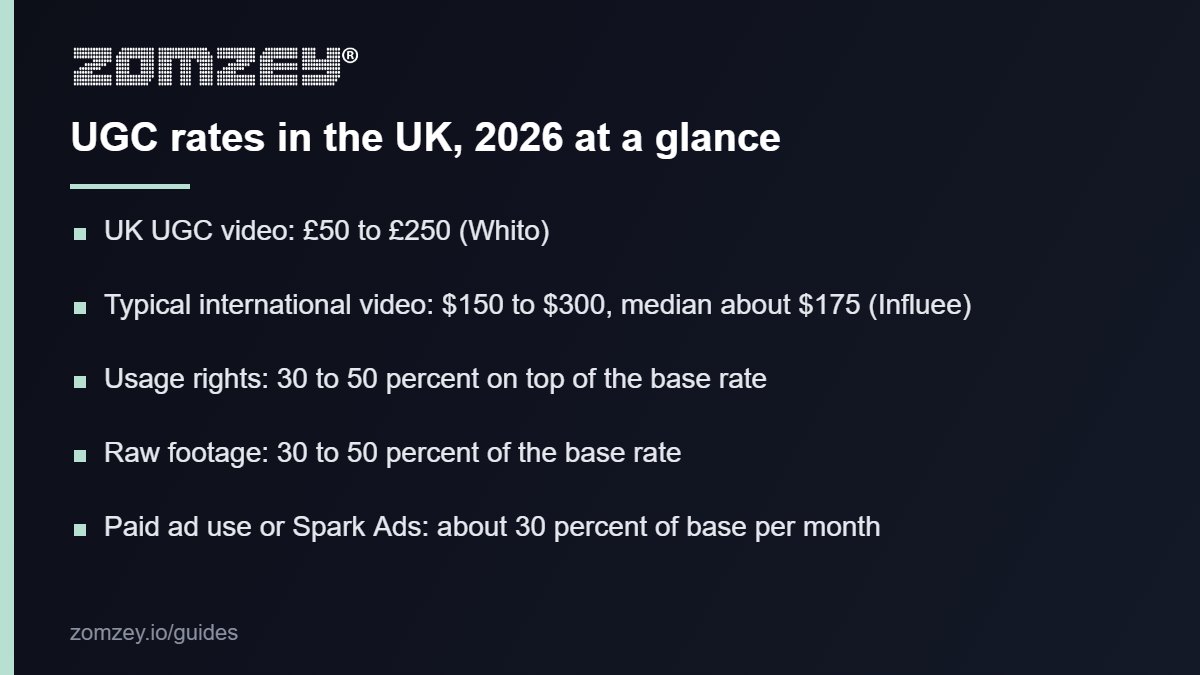
For UK creators, Whito’s 2026 UK rate research puts a UGC video at £50 to £250, for content the business posts on its own channels. The international benchmarks collected by Influee’s UGC rates guide put a typical video at $150 to $300 with a median of about $175, beginners starting around $100 and experienced creators at $500 and above, a product photo at around $80, and hourly work, which is rarer, at $50 to $100. UK UGC rates sit a little below the dollar figures for beginners and level with them for creators who can shoot, edit and deliver on a brief without supervision.
Three things move a quote within that range: the complexity of the brief (an unboxing on a phone against a scripted multi-scene edit), the creator’s track record with brands, and the number of variations the brand wants. A creator who delivers a clean 30-second vertical video with captions, a hook and a call to action, on time, with the product shot well, earns the top of the UK range quickly.
Usage rights, raw footage and ad use
The base fee covers a finished video the brand may post organically on its own channels for an agreed period. Everything else is an add-on and should be priced. Influee’s benchmarks put usage rights at a 30 to 50 percent uplift on the base rate, raw footage at 30 to 50 percent of the base rate, whitelisting or Spark Ads (the brand running the content as a paid advert) at about 30 percent of the base rate per month, rush delivery at 25 to 50 percent, and extra hook or call-to-action variations at around $50 each.
A creator who posts the content on their own account as well as delivering it to the brand charges a premium of 20 to 30 percent, because at that point UGC rates meet influencer rates and the audience is part of the deal.
Price the rights in time as well as scope. Six months of organic use is a different licence from perpetual use in paid adverts, and brands that want the second should pay for it.
How to bundle
Brands buy UGC in sets, because an advert needs variations to test. Discounts of 5 to 10 percent for two videos, 10 to 15 percent for three or four and 15 to 25 percent for five or more are normal, which means a five-video set at £150 each lands at around £560 to £640 rather than £750. Put the bundle on a rate card with the rights included and the add-ons priced, and brands can book without a negotiation.
A worked UGC rate card
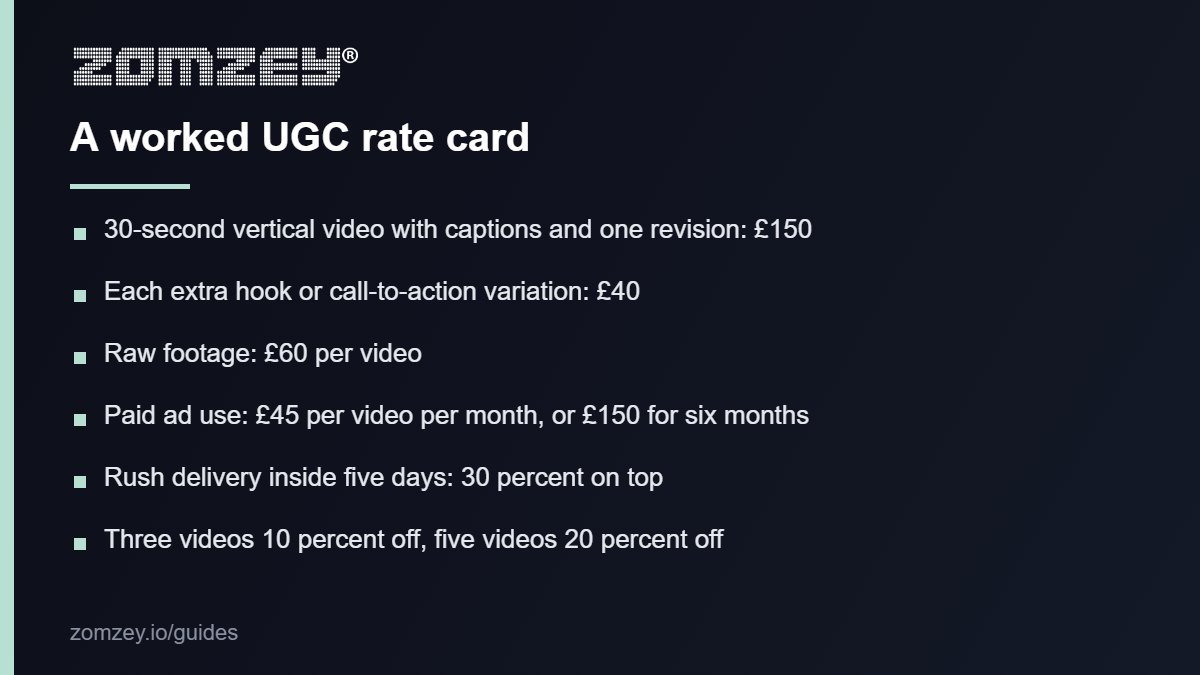
A UK creator with a small portfolio and reliable delivery might publish UGC rates like these: one 30-second vertical video with captions and one round of revisions, £150, including three months of organic use on the brand’s own channels; each additional hook or call-to-action variation, £40; raw footage, £60 per video; paid ad use, £45 per video per month, or £150 for six months; perpetual organic use, double the base fee; rush delivery inside five days, 30 percent on top; three videos, 10 percent off; five videos, 20 percent off.
A brand that wants three videos with raw footage and six months of paid use would pay £405 for the videos, £180 for the footage and £450 for the ad rights, a little over £1,000 for a set it can test in adverts for half a year.
The card does two jobs. It tells brands what UGC rates include, so a request for raw footage or ad use becomes a line item rather than a favour, and it gives the creator a figure to hold when a brand asks for everything at the base price.
What brands expect for the money
A brief with the product, the audience, the hook, the key messages, the format and the length, the number of variations and the rights. From the creator: good light and sound, a clear hook in the first three seconds, the product shown in use, honest delivery, captions, the file in the right dimensions, one round of revisions, and delivery on the agreed date. Creators who ask for the brief in writing and confirm the rights before shooting avoid the two most common disputes about UGC rates: scope creep and reuse the creator never agreed to. The free campaign brief generator shows a brand what a complete brief looks like.
UGC rates versus influencer rates
UGC is paid for the content; influencer work is paid for the audience. A creator with 2,000 followers can earn £150 for a UGC video a brand uses in adverts, and a creator with 50,000 followers charges for the post on their own feed as well. Many creators sell both: a UGC package for brands’ channels and sponsored posts for their own. The free influencer pricing calculator prices the audience side, and our guide to influencer rates by platform covers the posted content; UGC rates are set by the brief, not the follower count.
The rules that still apply
UGC that a brand posts on its own channel is advertising by the brand, and it must not be presented as an independent customer review if it was paid for. When a creator posts the same content on their own account for a fee or a gift, it must carry an ad label; the ASA and CMA Influencers’ Guide explains what counts. Income from UGC is usually taxable, and GOV.UK explains when to register as self-employed and the trading allowance that covers small amounts.
Getting the fee paid
UGC is where creators most often deliver first and chase later, because the brand holds the content before it pays. Agree the fee, the deliverables, the rights and the date in writing, and have the brand fund the deal before you shoot. On ZOMZEY a brand posts the brief, creators send priced offers, the deal is funded under Protected Payments before the work starts, the creator uploads the content as evidence, and the money is released when the brand approves it, so UGC rates agreed on the deal page are the rates that arrive.
Want regular UGC rather than single videos? Post a job free on ZOMZEY and Influencers apply through their profile.
Hiring? Read our guide to hiring Influencers for UGC in the UK.
Common questions about UGC rates
What should a beginner charge for UGC?
£50 to £100 a video for the first few brands, rising to £100 to £150 once you have a small portfolio and a brand or two who will vouch for you. Charge for rights from the first deal.
Do UGC rates depend on my follower count?
No. UGC is priced on the work and the rights. Followers matter only if the brand also wants you to post the content on your own account, which is a separate fee.
Should I give the raw footage?
Only for a fee, usually 30 to 50 percent of the base rate, and with the rights spelled out, because raw footage lets the brand make unlimited new edits.
How long should usage rights last?
Three to six months of organic use is a common starting point, with paid ad use and longer periods priced separately. Perpetual rights should cost materially more than a single period.
What if a brand uses the content beyond what we agreed?
A written agreement with the rights defined is your protection, and a deal recorded on ZOMZEY keeps the brief, the rights and the approval in one place if a dispute needs reviewing.
Do I need to appear on camera to earn UGC rates?
No. Hands-only demonstrations, voice-over product videos, unboxings and lifestyle shots with the product in frame all sell, and some brands prefer them because they fit more adverts. Creators who are comfortable on camera can charge more for testimonial-style videos, but the camera is not the price; the brief and the rights are.
How do brands in the UK find UGC creators?
Through marketplaces, agencies and direct search on TikTok and Instagram, in roughly that order of convenience. A profile with a short reel of past work, published UGC rates and reviews from completed deals is what gets booked, which is why creators on ZOMZEY list packages with prices rather than waiting to be asked.
In short, UGC rates in the UK for 2026 start at £50 to £250 a video and rise with the brief, the rights and the creator’s reliability. Price usage, raw footage and paid ad use separately, bundle for brands that need variations, put it all on a rate card, and fund every deal before you shoot.