Pop-Up Shop Hire in the UK: What It Costs, What to Charge and How Venues Earn From It
Pop-up shop hire has two sides, and both are badly informed. Brands and makers who want a space for a weekend rarely know what it should cost, and the shops, galleries, cafes and venues that have space to spare rarely know what to charge. This guide sets out the published price ranges for 2026, how a venue turns a corner, a window or a quiet Tuesday into a product with a price, how a brand should budget for a pop-up, and how the two sides agree a deal that is paid before the doors open.
Brands, makers and authors post paid opportunities on ZOMZEY and venues pitch for them, with every booking funded before the pop-up starts.
What pop-up shop hire costs in the UK
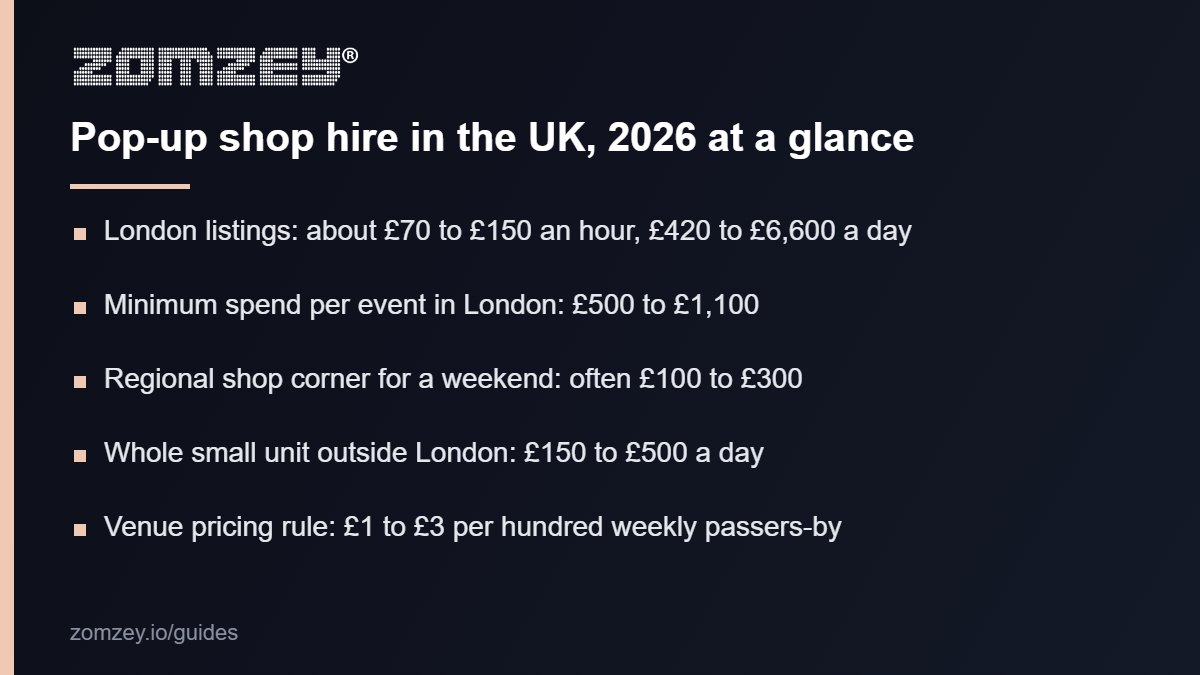
Listed prices vary enormously by city, size and footfall. On Tagvenue’s London listings, as of October 2026, pop-up shop hire typically runs from about £70 to £150 an hour, from roughly £420 to £6,600 a day for a whole space, and from £500 to £1,100 as a minimum spend per event, with an average of around £100 an hour and the cheapest rooms starting at £50 an hour. The full ranges are on Tagvenue’s pop-up shop pages for London.
Outside London the same kind of space costs a third to a half of that: a high street shop corner in a regional town for a weekend is often £100 to £300, a whole small unit £150 to £500 a day, and a market-town gallery or cafe wall £50 to £150 a day.
Those are rents for empty space. What a brand actually buys, and what a venue should sell, is space plus an audience plus a story, and that is where pop-up shop hire stops being a property transaction and becomes a promotion.
What a venue is really selling
A shop with 300 customers a day sells three things to a brand that takes a corner for a week: the corner itself, the 2,000 people who will walk past it, and the shop’s recommendation, which is implied by letting the brand in. A cafe with a loyal morning crowd, a gallery with a mailing list, a bookshop with a Saturday queue, a gym with a captive audience between classes: each has an audience worth money to the right brand, and pop-up shop hire is the way that audience is sold without the venue changing what it does. Price all three, not just the floor space.
Packages a venue can offer
Turn the space into a menu. A window takeover for a fortnight. A front-of-store table for a week. A counter display or a shelf for a month. A whole-space pop-up for a weekend, with the venue’s staff or without. A launch evening with the room, the drinks and a mention to the mailing list. A sampling day where the brand’s people stand by the door. A window plus a social post plus a newsletter feature as a bundle. Each item gets a plain description, a duration and a price, and the venue decides what it will not host.
The free Hub Earnings Estimator gives a starting range for a space of your footfall and reach, and the rate card template turns the menu into a page a brand can book from.
How to price pop-up shop hire as a venue
Start from footfall and the alternative. Count the people who pass the space in a typical week, estimate the share who will notice a display, and compare with what the brand would pay to reach the same number through local advertising or a market stall. Then add the value of your audience’s trust: a display in a shop whose customers trust its taste is worth more than a stand in a shopping centre corridor.
A reasonable starting formula for pop-up shop hire for a regional independent is £1 to £3 per hundred weekly passers-by for a window or table placement, so a shop with 2,000 passers-by a week prices a window at £20 to £60 a week plus any staff time, and a whole-space weekend at the local daily hire rate plus the same audience premium. Adjust after two bookings, when you know what sold.
How to budget pop-up shop hire as a brand
Budget pop-up shop hire for four things, not one: the hire, the fit-out (stock, display, signage, a card reader), the promotion before and during (a creator visit, a local newsletter, your own list), and the people on the day. For a weekend in an independent shop outside London, a realistic total is £300 to £1,200; for a London unit, several times that. Measure it by sales on the day, sign-ups, content captured and the shop’s own audience reached, and treat the first pop-up as a test. Brands post the space they want as an opportunity on ZOMZEY, with the budget and the dates, and venues reply with priced offers.
Finding each other
Venues find brands among the makers and authors already selling in their area, the brands their customers mention, and the opportunities Pioneers post on ZOMZEY, where a venue lists its space and packages and pitches for paid placements.
Brands find venues for pop-up shop hire the same way in reverse: the shops their customers already visit, the venues whose audience matches the product, and the Hubs listed on ZOMZEY with validated figures, reviews and a rate card. Either way the deal is agreed in writing and funded under Protected Payments before the pop-up, and released to the venue when the brand approves the evidence that it ran. No deposits to chase, no invoices, and a record of every pop-up shop hire you have ever sold.
The agreement
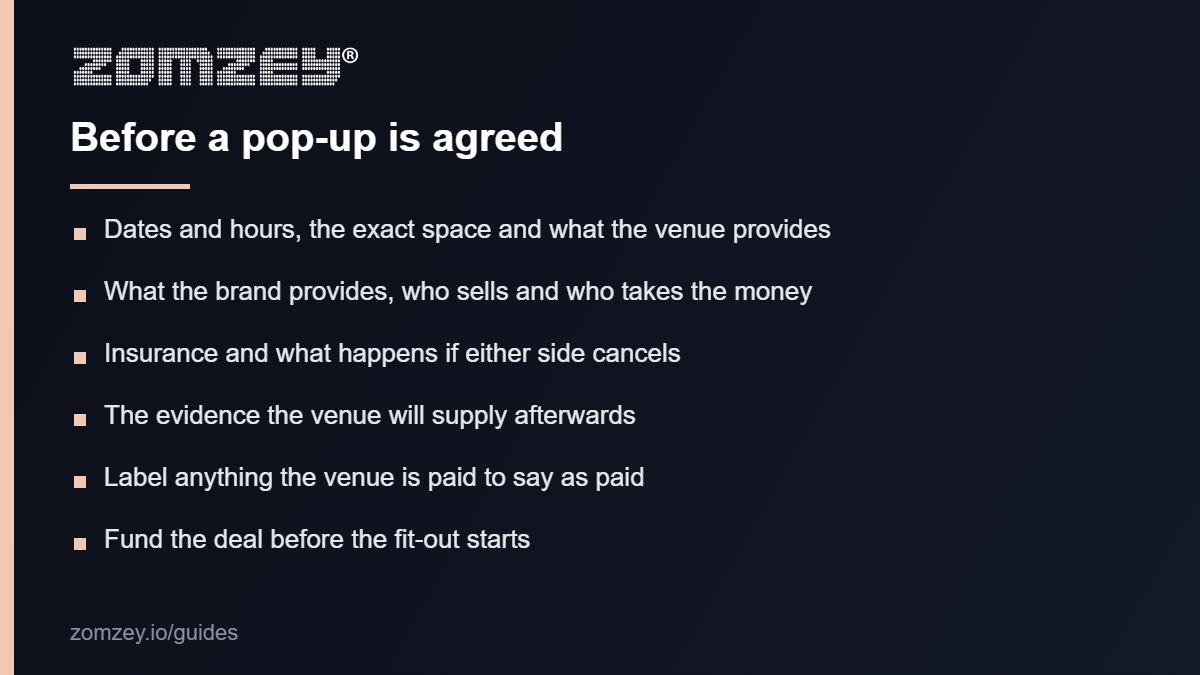
Write down the dates and hours, the exact space, what the venue provides (power, fixtures, staff, storage), what the brand provides, who sells and who takes the money on the day, insurance, what happens if either side cancels, and the evidence the venue will supply.
Agree what the venue will say to its audience and label anything that is paid as paid: a window the brand has paid for is a promotion, and anything the venue is paid to say to its audience must be labelled as such, as the ASA and CMA guidance on paid promotion explains. Income from pop-up shop hire is usually taxable for the venue, and GOV.UK explains when to register as self-employed if the venue is an individual rather than a company.
Making the pop-up work on the day
Tell the audience in advance, through the venue’s list and the brand’s, with a date and a reason to come. Give the display one message and one price point. Capture content: the brand films, the venue posts, both tag each other. Offer something only available in the room. Count what happened: sales, sign-ups, footfall, mentions. Then write the report the next day, because a pop-up with numbers attached is the one that gets booked again, and the venue that supplies the numbers is the one brands return to.
Find Hubs near you
Hubs are the real world shops, venues, clubs and communities on ZOMZEY that host promotions, events and product placements. Each city page lists the Hubs active there.
- All Hubs by city
- Scotland: Glasgow, Edinburgh, Dumfries, Dalbeattie, Maybole, Thornhill and Sanquhar.
- England: Greater London, East Devon, Brixham, Paignton and Weymouth.
- Northern Ireland: Belfast and Bangor.
Common questions about pop-up shop hire
How long should a pop-up run?
Two days to two weeks for most brands, and most pop-up shop hire is sold in those blocks. A weekend concentrates attention and staff; a fortnight gives a window time to work. A month suits a product with a slow decision, such as furniture or art.
Should a venue take a percentage of sales instead of a fee?
A fee for the space plus a small percentage of sales aligns both sides, but only where the venue can see the sales. For a window or a shelf where the venue sells the product itself, a fee plus a trade margin is simpler and clearer.
Does a venue need insurance for pop-up shop hire?
The venue’s public liability cover usually applies to its own premises, and the brand should carry its own product and liability cover. Check both policies before the first booking and write who covers what into the agreement.
What if the brand does not turn up or does not pay?
With a direct booking you rely on a deposit and goodwill. With a booking funded under Protected Payments the money is held before the dates and released on approval, and a dispute is reviewed against the written agreement if the brand goes quiet.
Can a cafe, gym or gallery sell pop-up shop hire?
Yes, and they are often the best venues, because their audience arrives with time and attention. A cafe wall, a gym reception or a gallery foyer is a placement like any other, priced on footfall and fit.
In short, pop-up shop hire is worth far more than the floor space: a venue sells its audience and its trust, a brand buys attention it cannot get online, and both do better when the package, the price and the evidence are written down. Run the booking through ZOMZEY and the money is held before the doors open.