How to Promote a Music Release in the UK: A Practical Plan for Independent Artists
To promote a music release well, you need a plan that starts six weeks before the date and runs six weeks after it, uses the people who already reach your listeners, and spends what little money there is on things that can be measured. This guide gives independent artists, bands and singers a week-by-week plan for 2026, the UK figures that explain why it is built this way, what each kind of promotion costs, where to find partners, and how to pay creators, venues and media safely.
Musicians post what they want promoted on ZOMZEY and creators, venues, playlists and music media send priced offers, with every deal funded before the work starts.
The UK picture in 2026
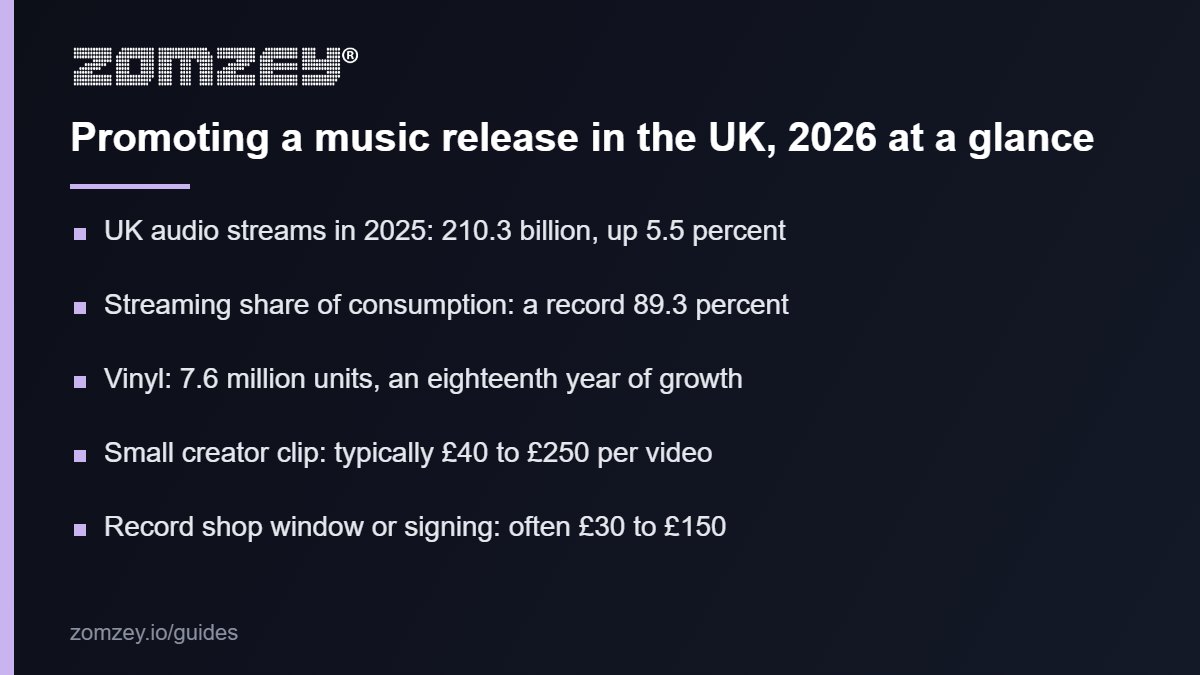
The BPI’s figures for 2025 put UK audio streams at 210.3 billion, up 5.5 percent on the year, with streaming at a record 89.3 percent of consumption, while vinyl grew for an eighteenth consecutive year to 7.6 million units; the year’s chart stories included Lola Young, Olivia Dean, Skye Newman and Sam Fender, most of them acts that built audiences online before radio caught up. The figures are summarised by Music Business Worldwide. Two lessons follow for anyone trying to promote a music release: the audience is on streaming and short video, and the physical and live side still matters to the fans who pay.
The six-week plan to promote a music release
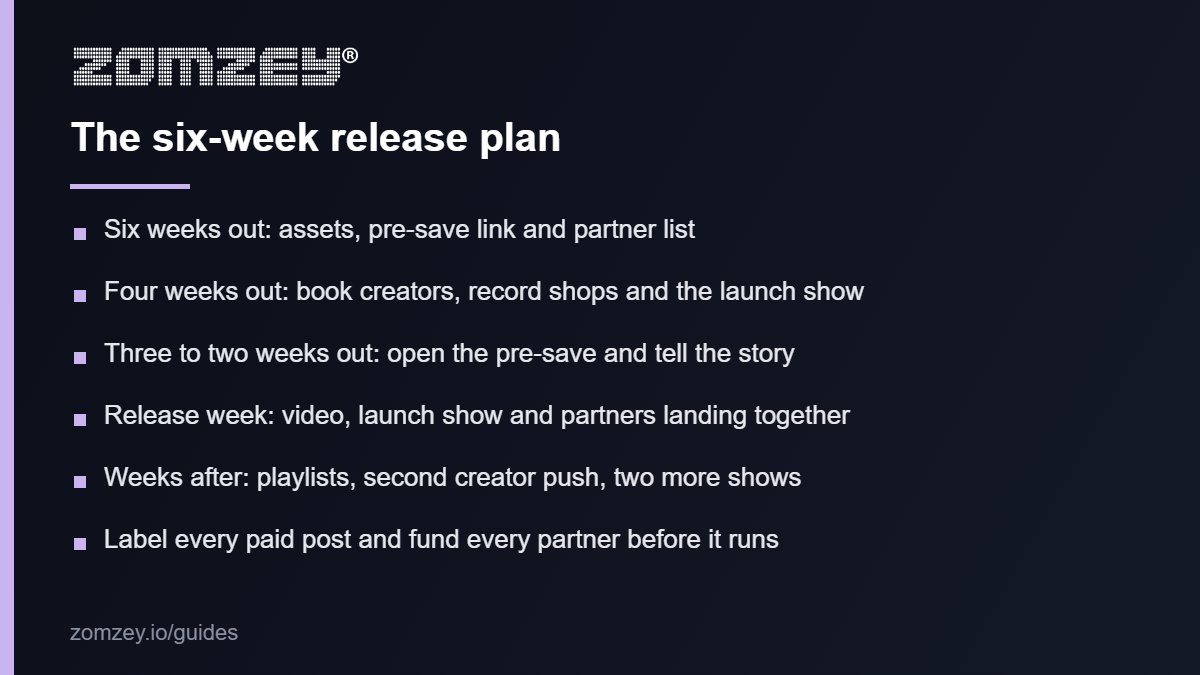
Six weeks out: set the release up properly
Deliver the track to your distributor with the correct ISRC, credits and a release date at least four weeks ahead, so that it can be pitched for editorial playlists through the streaming platforms’ own submission tools. Register the song with PRS for Music and the recording with PPL so that royalties reach you. Prepare the assets once: cover art, a lyric or performance video, three vertical clips of fifteen to thirty seconds, a press photo and a one-paragraph story about the song. Everything that follows uses those assets.
Five and four weeks out: line up the partners
Decide who can reach your listeners and ask them now, because good partners book up. A local venue for a launch show. Two or three creators whose audience matches the song, booked for a short video each. A playlist curator or a radio show in your genre. A record shop for a window, a signing or an in-store. A newsletter or a community that covers your scene. Each is a paid or gifted collaboration, and each should be agreed in writing with a date, a deliverable and a price.
On ZOMZEY you post what you want promoted and partners send priced offers, or you find them in Discover with validated figures and reviews; either way the deal is funded under Protected Payments before anyone starts.
Three and two weeks out: build the pre-save and the story
Open the pre-save link and put it everywhere, with a reason to click rather than a bare request. Start the story on your own channels: how the song came about, an acoustic verse, a studio clip, the artwork reveal. Give your partners their assets and dates. Book a local press piece or a podcast interview; both take about two weeks to land.
Release week
This is the week you promote a music release hardest. Release on the Friday, post the video the same morning, play the launch show that weekend, and have your creators, the record shop and the playlist all land in the same seven days, because concentration is what makes a release look like an event. Thank everyone publicly and share what they made.
The six weeks after
This is where most artists stop trying to promote a music release, and should not. Release a second video, an acoustic version or a remix at week three. Keep pitching the track to playlists whose curators accept submissions. Run a second small creator push on the clip that performed best. Play two more shows. The streaming platforms’ algorithms reward a track that keeps gaining listeners, and a release promoted for twelve weeks reaches far more people than one on which the same budget is spent in a single week.
What it costs to promote a music release
A creator video from a small music or lifestyle account in the UK typically costs £40 to £250, rising with audience and usage rights; the free Influencer Pricing Calculator gives a range by platform and follower count. A record shop window or a signing is often £30 to £150 for an independent. A launch show at a small venue ranges from free with a bar deal to a few hundred pounds for room hire. Paid playlist placement should be approached with care: pay only curators who disclose that placement is paid, who have real listeners, and never any service that promises streams, which breaches the platforms’ rules and can get a track removed.
The cheapest way to promote a music release is the one you already have: your own list, your own socials and the fans who will share a release if you ask them on the day.
Where to find partners to promote a music release
Start local, because local is where a release becomes a show and a show becomes a story. Venues, record shops, student radio, college music societies and the creators in your town who film gigs are all reachable and affordable. Then go by genre: the playlists, podcasts, newsletters and creators who cover your kind of music, wherever they are. On ZOMZEY all of those are Hubs and Influencers you can pay through one platform, with the deal recorded and the payment released when the work is approved, and you can use ZOMZEY Beacon to invite a venue, a shop or a creator who is not a member yet.
The rules when you promote a music release
A creator who is paid or gifted to feature your song is advertising it, so the post must be labelled as an ad in the UK, as the ASA and CMA Influencers’ Guide explains, and the responsibility is shared with you. Paid playlist placements should be disclosed by the curator, and on licensed radio you buy advertising or sponsorship rather than plays. Usage rights matter in the other direction too: agree in writing whether you may reuse a creator’s video on your own channels and for how long. Income from a release is usually taxable, and GOV.UK explains when to register as self-employed and the trading allowance that covers small amounts.
Measuring it
You cannot promote a music release well twice without measuring the first one. Give each partner a different link or code, read your distributor’s dashboard weekly for streams by source and by city, and note what each creator clip, show and placement produced. Keep the three things that moved the numbers and drop the rest for the next release. On ZOMZEY the evidence each partner uploads to the deal page, the link, the dated screenshot, the figures, is the same record you need to judge what worked.
Hiring musicians, a band or session players? Post a job free on ZOMZEY and reach bands, singers and musicians who apply through their profile.
Find bands, musicians and places to play
ZOMZEY lists acts and venues by city, so a release can be promoted by people who are already active where the audience is.
- Bands on ZOMZEY, browsable by city.
- Musicians on ZOMZEY, browsable by city.
- Hubs by city, including the venues and clubs that host live music and in person promotion.
Hiring? Read our guide to hiring bands and musicians for events in the UK.
Common questions about how to promote a music release
How much does it cost to promote a music release independently?
A useful first campaign can be run for £300 to £1,000: a few creator clips, a record shop placement, a launch show and a modest assets budget. Spend more only once you know which channel moves your streams.
Should I promote a music release before or after the date?
Both, with the heavier spend after. Pre-release builds the pre-saves and the story; the weeks after the date are when playlists, creators and shows compound each other.
Do I need a PR company?
Not for a first release. To promote a music release at this stage, a clear story, the right local partners and consistent activity do most of what a PR retainer does. Bring in PR when a release has a story that national media would want.
Can a manager or an agency run this for me?
Yes. On ZOMZEY an agency can represent you by consent, pitch and book partners for you and take its agreed share through ZSplit when a deal is released, with your account staying yours throughout.
What if an Influencer, creator or venue does not deliver?
With a direct arrangement you lose the money and the slot. With a deal funded under Protected Payments the money is held until the work is approved, and a dispute is reviewed against the written agreement if the partner goes quiet.
In short, to promote a music release in the UK, set it up six weeks out, book the partners who already reach your listeners, concentrate everything into release week and keep going for six weeks after, measuring each channel by a link of its own. Pay creators, shops and venues through ZOMZEY and every deal is funded before the work starts.