How to Start an Influencer Agency in the UK: Roster, Rates, Rules and Getting Paid
You can start an influencer agency in the UK with a laptop, three creators who trust you and a clear agreement about money. What separates the agencies that last from the ones that fold within a year is not the size of the roster but the quality of the paperwork, the honesty of the labelling and whether the agency actually brings its talent work rather than only taking a share of work the talent found themselves. This guide covers the business set-up, how commission works, how to build and keep a roster, where the deals come from, the rules that bind an agency, and how to get paid without chasing brands for invoices.
Agencies on ZOMZEY manage their roster from one account, pitch for funded opportunities and take their agreed share automatically through ZSplit.
Decide what kind of agency you are
There are three models, and the paperwork differs for each. A talent management agency represents creators, develops their careers and takes a share of everything they earn. A booking agency or agent finds and negotiates individual deals and takes a share of those deals only. A campaign agency works for brands, finds creators for each brief and charges the brand a fee or a margin. Most people who start an influencer agency begin as a booking agent for a handful of creators and grow into management, so this guide follows that path.
Set the business up properly
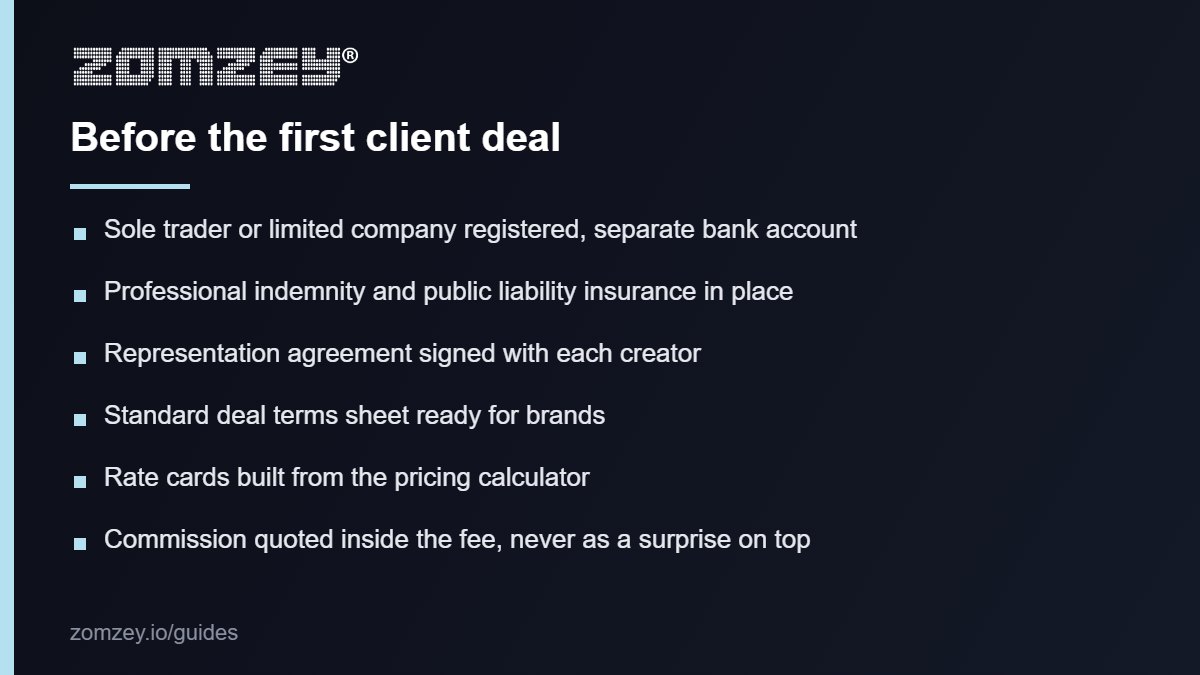
To start an influencer agency on a sound footing, register the business, either as a sole trader or a limited company, and open a separate bank account before the first deal; GOV.UK’s guide to setting up a business covers both routes. Take out professional indemnity and public liability insurance, because you will be giving advice and signing agreements on behalf of other people. Write two documents and have them checked: a representation agreement between the agency and each creator, and a standard deal terms sheet for brands. Keep client money separate from agency money from day one, since handling a creator’s fee is the point where trust is won or lost.
How commission works when you start an influencer agency
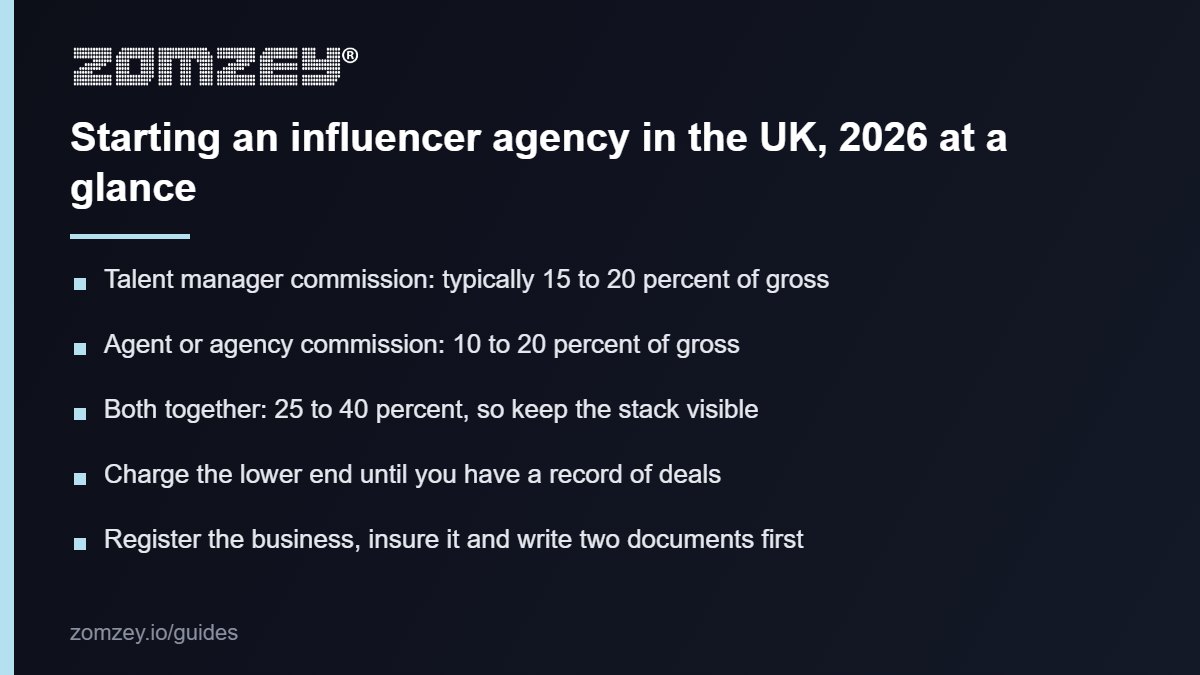
Market practice is well established. A talent manager typically takes 15 to 20 percent of a brand deal’s gross value, an agent or agency 10 to 20 percent, and where a creator has both, the two cuts together can reach 25 to 40 percent, as Make Influence’s guide to manager and agent commission sets out.
Those are conventions, not rules, and the fairest structure when you start an influencer agency is a single rate, charged only on deals the agency brought or negotiated, with no commission on work the creator found alone unless the representation agreement says otherwise and the creator has agreed it. Write the rate, what it applies to, when it is paid and how either side ends the arrangement into the representation agreement, and make the notice period short, because creators who feel trapped leave badly.
Build a roster worth representing
Five creators you can sell beat fifty you cannot, which is the first lesson for anyone who wants to start an influencer agency. Choose by fit with the brands you can reach, by reliability and by engagement rather than follower count, and look beyond social accounts: podcasters, newsletter writers, musicians, bookshops and community hosts are all represented on ZOMZEY and are an almost untouched client group for agencies. Agree with each creator what you will do for them in the first ninety days, do it, and report on it. A creator joins an agency for deals; keep them by bringing deals, by negotiating better terms than they would get alone, and by handling the admin they hate.
Where the deals come from after you start an influencer agency
Brands you approach directly with a short, specific pitch for one creator and one idea. Brands already running creator campaigns in your niche, who have a budget and a process. Local and specialist businesses that have never used a creator and need someone to make it easy.
And marketplaces: on ZOMZEY, brands, authors and businesses post funded opportunities, the agency pitches for them on behalf of its roster through the Prospect Centre, and the deal is agreed in writing and funded under Protected Payments before the work starts. When the deal is released, the creator is paid and the agency’s agreed share arrives automatically through ZSplit, which removes the two jobs that eat an agent’s week: chasing brands for payment and chasing creators for commission.
The rules that bind an agency
An agency can be held responsible, alongside the brand and the creator, for every paid post being clearly labelled as an ad. The ASA and CMA Influencers’ Guide sets out the labels that count, and the CMA has made clear that it looks at the whole chain, not only the creator who posted. Put the label into every brief and every deal sheet.
Beyond advertising, three more rules apply when you start an influencer agency. Creators’ personal data, rates and brand relationships are confidential and belong to the creator, not the agency. Any money held on a creator’s behalf is theirs and should be paid promptly and transparently with a statement. And the representation agreement must not lock a creator in: consent to be represented, clear scope, and a clean way to leave.
Pricing deals for your roster
Pricing is the skill that decides whether you can start an influencer agency and keep it. Start from the free Influencer Pricing Calculator for a baseline by platform, format and audience, then add what an agency should always price separately: usage rights, exclusivity, production, revisions and timing. Put each creator’s starting prices on a rate card so brands can book quickly, and quote the agency’s commission inside the fee, never on top of it in a way the brand did not expect. A brand that understands exactly what it pays for and a creator who understands exactly what they receive are the two conditions for a deal that renews.
Benchmarks for your roster’s rate cards are in influencer rates by platform, and client budgets in influencer marketing cost in the UK.
Running the agency day to day
Once you start an influencer agency the routine is simple. Keep one record per deal: the brief, the agreed fee, the deliverables, the dates, the label, the evidence and the payment. Review every deliverable before it goes live for the label and the key messages. Send the brand a short report after each deal and the creator a statement after each payment. Track the numbers that matter: deals per creator per quarter, average fee, renewal rate, days from pitch to payment. On ZOMZEY the deal page holds that record for every deal, and the agency dashboard shows the roster’s activity in one place.
Common questions about how to start an influencer agency
Do I need a licence to start an influencer agency in the UK?
No specific licence, but the business must be registered and, if it handles creators’ money or finds them work in certain fields, it may fall under the employment agency rules, so take advice before you hold client funds. Using a platform that holds and releases the money removes most of that risk.
How many creators do I need to start an influencer agency?
Three to five who fit the brands you can reach are enough to start an influencer agency. Grow the roster only as fast as you can bring each creator deals, because a creator with no work from you will leave and say so.
What commission should a new agency charge?
Ten to twenty percent of the gross fee on deals the agency brought or negotiated is the convention. Charge the lower end until you have a record of deals, and raise it when you can show what you add.
Can an agency represent shops, venues or podcasters as well as influencers?
Yes. Hubs and creators of every kind can join an agency roster on ZOMZEY by consent, and shops, venues and communities are a market most agencies have never served.
Should an agency charge creators a joining fee?
No. A reputable agency earns from the deals it brings, not from the creators it signs, and a joining or listing fee is the clearest warning sign a creator can see. If you need working capital to start an influencer agency, keep the roster small and the overheads smaller until the first commissions arrive.
What happens if a brand does not pay?
With a direct deal the agency chases the invoice and the creator waits. With a deal funded under Protected Payments the money is held before the work starts, released on approval, and split automatically, and a dispute is reviewed against the written agreement if the brand goes quiet.
In short, to start an influencer agency in the UK, register the business, write a fair representation agreement with a single clear commission, build a small roster you can genuinely sell, bring the deals, label every post and keep one record per deal. Run the deals through ZOMZEY and the agency’s share arrives automatically when the creator is paid.