How to Become a Brand Ambassador in the UK (2026): What It Pays, How to Get Chosen and the Rules
A brand ambassador is a creator a brand works with repeatedly rather than once: a few posts a month over a season or a year, usually for a mix of product, fee and commission, in exchange for a steady voice the audience comes to associate with the brand. For a small creator it is the most reliable income in the creator economy, because it replaces the hunt for the next deal with a relationship.
This guide explains what a brand ambassador does, how programmes pay in 2026, how brands actually choose ambassadors, how to get chosen with a small audience, what to check before you sign, the UK labelling rules that apply to every ambassador post, and how to make sure the money arrives each month.
List your profile on ZOMZEY, pitch for brand opportunities and build the completed deals and reviews that brands look for when they choose a brand ambassador. Free to join.
What a brand ambassador actually does
An ambassador posts about the brand on an agreed schedule, often two short videos and a set of Stories a month, uses the product in their ordinary content, shares a code or link, sometimes appears at events or in the brand’s own adverts, and gives the brand feedback it cannot get from a one-off post. The difference from a sponsorship is time. A sponsored post is bought once; a brand ambassador is retained, which is why the pay is structured differently and why brands choose ambassadors more carefully than they choose a creator for a single campaign.
How brand ambassador programmes pay in 2026
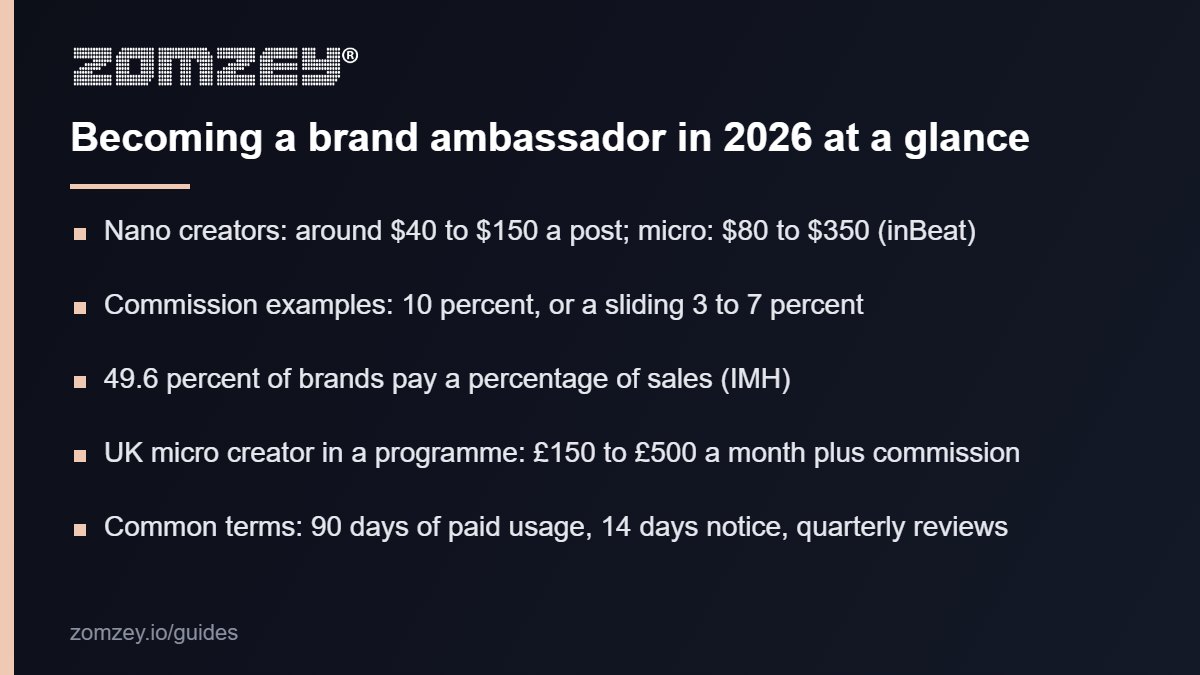
inBeat’s October 2026 guide to building ambassador programmes, written for the brands that run them, sets out the four structures creators will meet. Product-only, where the ambassador receives product and shipping and nothing else, which the guide notes rarely keeps a working creator active beyond the first post. Flat fees per deliverable, with nano creators on Instagram earning around $40 to $150 a post and micro creators $80 to $350 on inBeat’s figures, which sit at the lower end of the UK ranges in our rates guide, often bundled into a monthly package once the creator has proved their worth.
Commission, where the ambassador earns a share of tracked sales, with examples of 10 percent for a fashion brand and a sliding 3 to 7 percent for a high-priced product; the guide cites Influencer Marketing Hub’s finding that 49.6 percent of brands pay influencers a percentage of sales. And hybrid, a base fee plus commission, which is what most established programmes move to.
In pounds, a UK micro creator in a sustained programme can reasonably expect £150 to £500 a month in fees for two to three posts plus a 5 to 15 percent commission on code sales, with product on top and content usage rights priced separately. A brand ambassador with a small audience that buys can earn more from commission than from the fee, which is why the tracking terms matter as much as the headline rate.
How brands choose a brand ambassador
Brands recruit customers before they recruit creators. The same guide describes the search order: repeat buyers, people who have left reviews, accounts that tag the brand without being asked, engaged newsletter subscribers and community members come first; nano and micro creators whose audience matches the buyer come second, judged on fit and content quality rather than follower count. Applications typically ask for your handles, your audience figures, sample content, your experience with the product, your current partnerships and your agreement to the disclosure rules. Vetting checks audience match, content quality, engagement and conflicts with competitors.
How to get chosen with a small audience
Be a visible customer first
Buy the product, use it in your content without being asked, tag the brand, and leave a considered review. Brands building a programme start from exactly this list, and a creator who is already on it is halfway to being asked.
Show the figures brands check
Engagement rate, average reach, audience age and location, and one or two examples of content that sent people to a product. Put them in a one-page media kit and keep the figures dated. Our engagement rate benchmarks show what good looks like for your size.
Pitch the relationship, not the post
When you approach a brand, propose a quarter rather than a post: three months, two pieces of content a month, a code, a monthly summary of what the posts did, and a fee that reflects the bundle. A brand that was planning one sponsored post hears a brand ambassador proposal and often takes it, because it solves a problem they had not yet got round to.
Build the record brands trust
Completed deals, on-time delivery and honest reviews from brands are what a programme manager wants to see before committing to a year. On ZOMZEY every completed deal leaves a review on your profile and your figures are validated from your connected accounts, so a brand considering you as an ambassador can see the record rather than take your word for it.
What to check before you sign
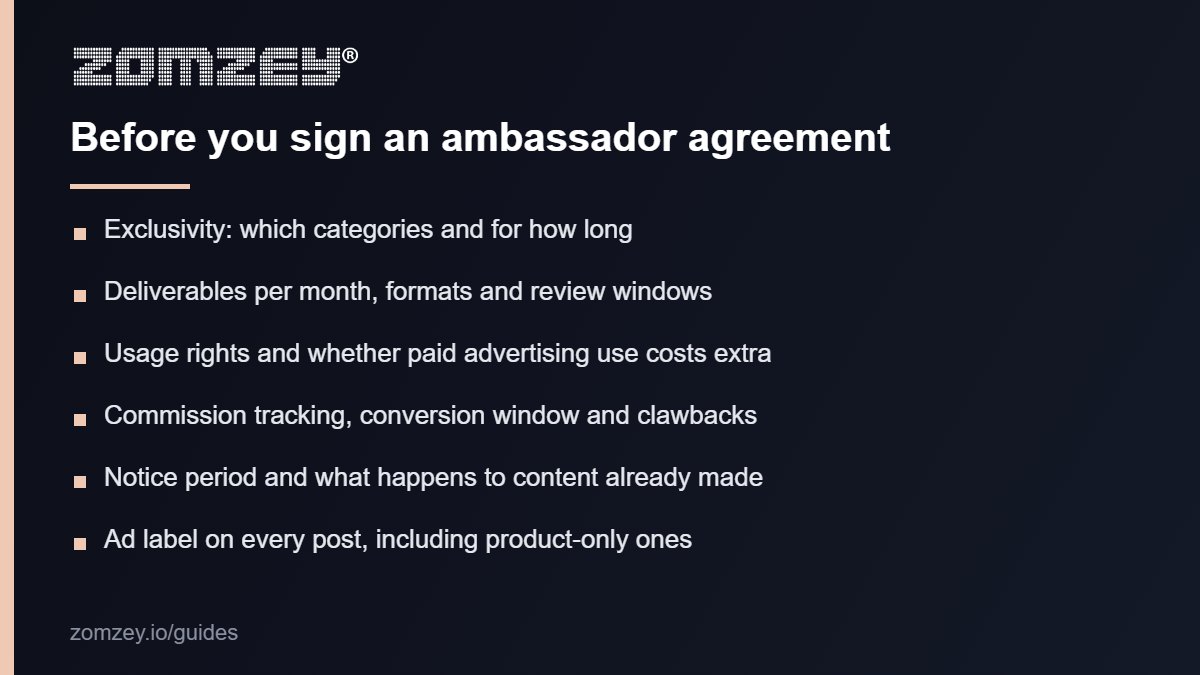
Exclusivity: which categories you cannot work with and for how long, and whether the fee reflects what you are giving up. Deliverables: exact numbers per month, formats, review windows and what counts as late. Usage rights: how long the brand may use your content (90 days of paid usage is a common term) and whether paid advertising use costs extra.
Commission mechanics: how sales are tracked, the conversion window, when commission is paid and whether refunds are clawed back, as some programmes do for the first two months. Notice: how either side ends the arrangement (14 days is common) and what happens to content already made. Reviews: many programmes review tiers quarterly and remove ambassadors who have not posted. Our guide to the influencer contract covers each of these clauses.
The UK rules for brand ambassador posts
Every post an ambassador makes about the brand is treated as advertising, including the ones made for product alone and the ones made between paid deliverables, because the relationship itself is the payment. Each needs a clear label such as #ad at the start, and the ASA and CMA Influencers’ Guide makes clear that the brand shares responsibility for it. Affiliate links and codes need a label too. Ambassador income, including commission and the value of product received in return for posts, is usually taxable, and GOV.UK explains when to register as self-employed and the trading allowance that covers small amounts.
Getting paid every month
The weakness of ambassador programmes is that the creator keeps posting while the invoices age. Agree the monthly fee and the commission statement date in writing, invoice on the same day each month, and keep the evidence of each post. On ZOMZEY a repeat arrangement can run as a series of funded deals: the brand funds each month’s deliverables under Protected Payments before you post, you upload the evidence, and the fee is released when the brand approves it, so a brand ambassador is paid for every month of the relationship rather than chasing at the end of it.
Common questions about becoming a brand ambassador
How many followers do I need to be a brand ambassador?
There is no threshold. Programmes recruit customers and nano creators deliberately, because their audiences buy on recommendation. Fit, engagement and reliability decide it, not followers.
Is a product-only ambassador deal worth taking?
For a product you already buy and a brand you want a relationship with, as a first step, yes. Set a review date after three months to move to a fee or commission, and remember that product-only posts still need an ad label.
Can I be a brand ambassador for more than one brand?
Yes, as long as the exclusivity clauses do not clash. Two or three non-competing brands are manageable; more than that and your audience stops believing any of them.
What should I charge as a brand ambassador?
Start from your per-post rate on the influencer pricing calculator, bundle the monthly deliverables at a modest discount, add a commission on code sales, and price usage rights and exclusivity separately. Put it on a rate card.
How long do ambassador programmes last?
Three months is a common trial, a year is common for an established programme, and most review quarterly. Expect the first quarter to decide whether it continues.
Do I need an agency?
No. Most ambassador programmes recruit directly from customers and small creators, and a marketplace profile with validated figures and reviews does the introduction.
In short, to become a brand ambassador in the UK in 2026, be a visible customer of brands you would recommend anyway, show dated figures and a small record of results, pitch a quarter rather than a post, read the exclusivity, usage and commission terms before signing, label every post, and have each month funded before you deliver. ZOMZEY gives brands the validated figures and reviews they look for and holds each month’s fee until the posts are live.