Influencer Media Kit: What to Include and How to Make One (UK 2026)
An influencer media kit is the document a brand reads before it decides whether to reply to you. It is not a CV and it is not a rate card; it is a short, honest case for why your audience is worth a brand’s money, with the figures to prove it. This guide explains what an influencer media kit should contain in 2026, how long it should be, whether to put prices in it, how to build one when you have never had a paid deal, how often to update it, and how to turn it into a profile that brands can book from directly.
Your ZOMZEY profile is a living influencer media kit: validated figures from your connected accounts, reviews from completed deals and a rate card brands can book from. Free to join.
What an influencer media kit is for
A brand manager with a shortlist of twenty creators gives each one about a minute. The influencer media kit has to answer four questions in that minute: who are you, who is your audience, what have you done for other brands, and how do we reach you. Everything else is decoration. vidIQ’s 2026 guide makes the point that a tight three-page kit can beat a ten-page one, because the reader is looking for a reason to say yes quickly, not for a portfolio to admire.
What to include
A cover with your name, niche and contact
Your name or handle, your niche in five words, a current photo and the email you actually check. Nothing else on the first page. If the brand cannot find your contact details in the first five seconds, the influencer media kit has already failed.
A short bio
Three to five sentences on what you make, who it is for and why they trust you. Credentials belong here if they are relevant (a qualified nutritionist who posts recipes, a teacher who reviews children’s books). Avoid adjectives about yourself and let the figures and the case studies do the talking.
Audience figures that can be checked
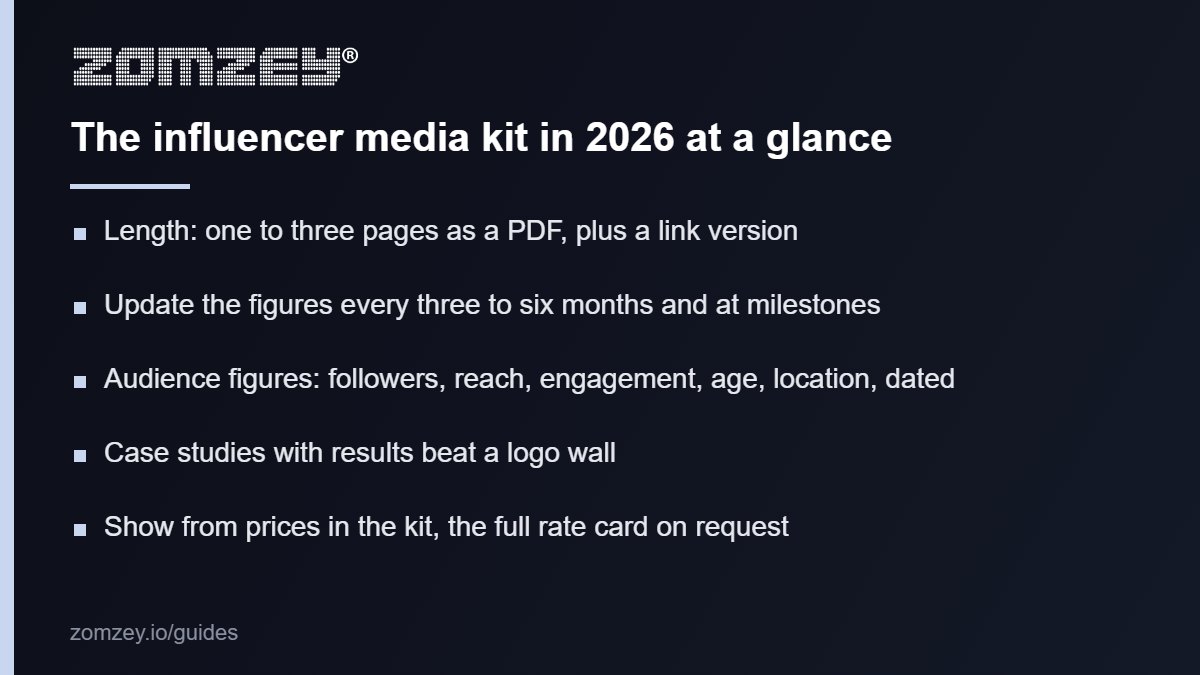
Followers per platform, average views or reach per post over the last 30 or 90 days, engagement rate, and audience demographics: age bands, gender split and top countries or cities, taken from your platform analytics. Put the date on the figures. Stack Influence’s 2026 guide recommends a review every three to six months and an update at every milestone. Use the free engagement rate calculator so the engagement figure is calculated the way brands calculate it, and put it next to the figure for your tier from our engagement rate benchmarks.
Case studies, not a logo wall
This is the section that wins deals, and the one most creators leave out. For each past campaign, give the brand, the objective (sales, awareness or content for the brand’s own channels), the format, the key result and one sentence on what worked. Lead with the case study that matches the stated goal of the brand you are pitching. A logo wall tells a brand you have been paid before; a case study tells them you understand what they are paying for.
Testimonials
One or two sentences from a brand you have worked with, placed next to the relevant case study. Ask for them at the moment the brand approves the work, when goodwill is highest.
Services and formats
What you sell: sponsored posts, Reels or TikToks, Stories, long-form video, UGC for the brand’s own channels, affiliate work, event appearances. List what you do not do as well, which saves everyone a round of email.
Content examples with links
Three to six of your best-performing pieces, each with a clickable link and the figure that made it a success. Choose pieces that show range as well as reach.
Should an influencer media kit include rates?
The two guides above disagree, which reflects the real trade-off. Publishing rates saves time and filters out budgets that will never fit; withholding them keeps room to price each brief on its scope and the rights involved. The middle route that works for most UK creators is a “from” price for each format in the influencer media kit and a full rate card sent on request or published on your ZOMZEY profile, where brands can book from it directly. Use the free influencer pricing calculator to set the “from” prices, and our guide to influencer rates by platform for the benchmarks behind them.
How long and in what format
One to three pages as a PDF is the norm for a creator with a handful of campaigns, with a longer version for agencies that ask for one. Canva, Google Slides and Notion all produce a clean kit; two fonts, your brand colours and plenty of white space. Name the file with your handle and the month, so a brand that finds it in six months knows how old the figures are. Keep a link version too, because a kit that lives at a URL is easier to update than a PDF sitting in a brand’s inbox.
Building an influencer media kit with no paid deals yet
Make the case study yourself. Buy a product you already use, make the content you would make for a paid brief, and track the result: views, saves, comments asking where to buy, clicks on a link. An organic post that sent 400 people to a brand’s website is a case study, whether or not the brand paid for it. Two of those, with honest figures, will get a small brand to reply. Our guide to how to get brand deals as a small creator covers the pitch that goes with the kit.
The claims you must be able to back up
Every figure in an influencer media kit should match a screenshot you can send within an hour, because brands ask. Inflated reach and bought followers end relationships and, in a paid deal, can amount to misrepresentation. State on the kit that you label paid posts as advertising; the ASA and CMA Influencers’ Guide sets out the rules, and a brand that sees the label mentioned in your kit knows you will not create a compliance problem for them.
Turning the kit into a profile brands can book
A PDF has to be sent, found and trusted. A ZOMZEY profile does the same job without the sending: your audience figures are validated from your connected accounts, reviews from completed deals stand in for testimonials, your packages and rate card are the services section, and brands post opportunities you can pitch for with the profile attached. When a deal is agreed it is funded under Protected Payments before you start, and released when the brand approves the evidence. The influencer media kit still earns its place for cold pitches and agency requests, and the two together cover every way a brand will find you.
A one-page influencer media kit, section by section
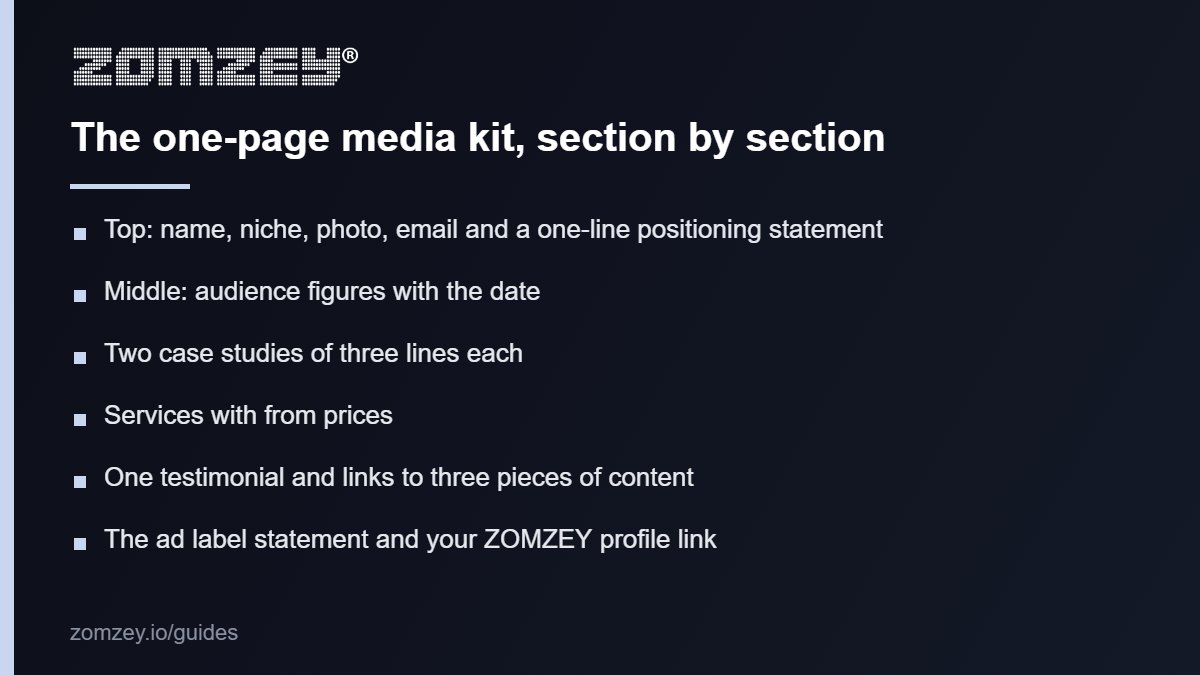
Top third: name, niche, photo, email and a one-line positioning statement. Middle: a row of audience figures with the date (followers, average reach, engagement rate, top age band, top location), then two case studies of three lines each. Bottom: services with “from” prices, one testimonial, links to three pieces of content, the ad label statement and your ZOMZEY profile link. Everything a brand needs, nothing it has to search for.
Common questions about influencer media kits
How many followers do I need before I make an influencer media kit?
None in particular. Brands working with nano and micro creators care about engagement, niche fit and reliability, all of which a kit can show at 2,000 followers. The case study section matters more than the follower figure.
Should I make a different influencer media kit for each brand?
Keep one master kit and change the order of the case studies and the lead sentence of the bio to match each pitch. A brand selling to parents should see your parenting figures first.
How often should I update it?
Check the figures every three months and update at once after a milestone: a follower threshold, a strong campaign result or a new format. Date the figures so a brand can see they are current.
Do I need a media kit if I am on ZOMZEY?
Your profile covers most of it, with validated figures and reviews a PDF cannot offer. Keep a short kit for cold pitches and for agencies that ask for one, and link both to each other.
What do brands most often say is missing?
Results. Follower counts without engagement, logos without outcomes, and content links without figures. Add the result to every example and the kit moves from a brochure to a business case.
In short, an influencer media kit in 2026 is one to three pages: who you are, verifiable audience figures with a date, case studies with results, services with “from” prices, a testimonial and a working email. Build it once, update it quarterly, and pair it with a ZOMZEY profile where brands can check the figures and book you directly.